JAMB Chemistry: Water
Hello, JAMB aspirants! We’re diving into the essential topic of Water—a compound that’s everywhere and frequently tested in JAMB. This covers water’s formation from hydrogen combustion, its role as a solvent (including dissolved gases), hard vs. soft water, water treatment, and properties like efflorescence and deliquescence. It links to mixtures, separation, gases, and even stoichiometry.
You’ll learn its uses, effects of dissolved gases, hardness causes/removal, treatment processes, and key phenomena. Let’s get hydrated with knowledge!
Water from Combustion of Hydrogen
Water forms when hydrogen burns in oxygen: 2H₂(g) + O₂(g) → 2H₂O(l)
By volume (Gay-Lussac’s law): 2 volumes of hydrogen + 1 volume of oxygen produce 2 volumes of water vapor (at high temperature). Composition by volume of reactants: Hydrogen:Oxygen = 2:1.


This demonstrates definite proportions—water always H₂O.
Uses of water: Drinking, solvent (universal!), agriculture, industry (cooling, cleaning), power generation, transportation (rivers/seas).
Water as a Solvent and Dissolved Atmospheric Gases
Water is an excellent solvent due to polarity—dissolves ionic/polar substances.
Atmospheric gases dissolved:
- Oxygen (O₂) → Essential for aquatic life (fish breathe via gills).
- Carbon dioxide (CO₂) → Forms carbonic acid (H₂CO₃), supports photosynthesis in aquatic plants; excess causes acidification.
- Nitrogen (N₂) → Less soluble, minor role but needed by some organisms.
Biological significance: Supports life in rivers/lakes/oceans; O₂ for respiration, CO₂ for plant growth.

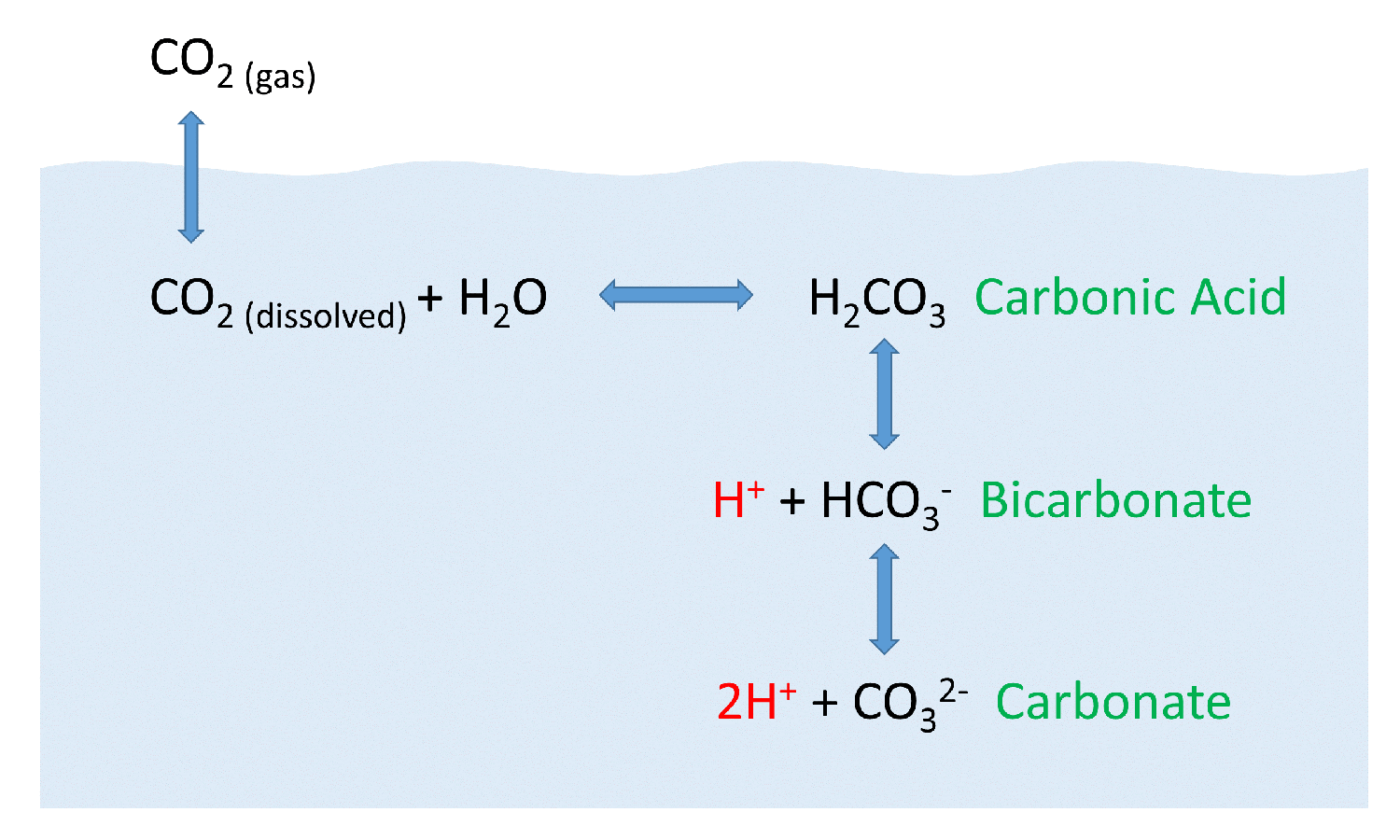
JAMB: Low dissolved O₂ kills fish; CO₂ vital for underwater photosynthesis.
Hard and Soft Water
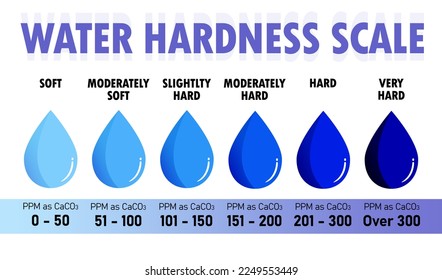
- Soft water: No dissolved Ca²⁺/Mg²⁺ salts; lathers easily with soap.
- Hard water: Contains Ca²⁺, Mg²⁺ (from limestone/gypsum); forms scum with soap (insoluble stearates), wasting soap.
Properties comparison:
| Property | Soft Water | Hard Water |
|---|---|---|
| Lathering with soap | Easy, good foam | Poor, scum forms |
| Boiler use | No scale | Scale (fur) builds up |
| Drinking/Cooking | Fine | May cause stones (debated) |
Causes of hardness:
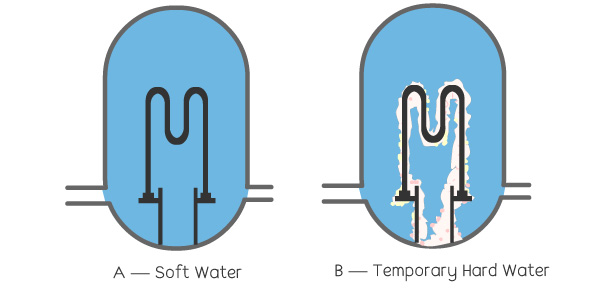
- Temporary (bicarbonate): Ca(HCO₃)₂, Mg(HCO₃)₂—dissolved from rocks by CO₂-rich rain.
- Permanent: CaSO₄, MgSO₄, CaCl₂, MgCl₂—not removed by boiling.

Methods of softening:
- Temporary: Boiling (decomposes bicarbonates to insoluble carbonates).
- Permanent/Both:
- Add washing soda (Na₂CO₃)—precipitates CaCO₃/MgCO₃.
- Ion exchange (permuitit)—Na⁺ replaces Ca²⁺/Mg²⁺.
- Distillation (removes all salts).
JAMB: Hard water wastes soap; softening saves money in industries.
Treatment of Water for Town Supply
Municipal water treatment makes raw water safe/potable.
Steps:
- Screening: Remove large debris.
- Sedimentation: Add coagulants (alum) to settle suspended particles.
- Filtration: Through sand/gravel beds.
- Chlorination: Kill bacteria (add Cl₂ or bleach).
- Sometimes: Aeration (remove odors), fluoridation (teeth health).


Processes: Coagulation, flocculation, sedimentation, filtration, disinfection.
Water of Crystallization, Efflorescence, Deliquescence, and Hygroscopy
- Water of crystallization: Fixed water molecules in crystal structure (e.g., CuSO₄·5H₂O—blue crystals). Heating dehydrates to anhydrous (white).

:max_bytes(150000):strip_icc()/copper-sulfate-crystals-56a12abe5f9b58b7d0bcae95.jpg)
Uses: Indicators (cobalt chloride blue dry → pink hydrated).
- Efflorescence: Hydrated crystals lose water to air, become powdery (e.g., Na₂CO₃·10H₂O → Na₂CO₃·H₂O + 9H₂O).
- Deliquescence: Substances absorb moisture and dissolve (e.g., NaOH, CaCl₂). Become liquid.
- Hygroscopy: Absorb moisture but don’t dissolve (e.g., conc. H₂SO₄, anhydrous CaCl₂). Used as drying agents.
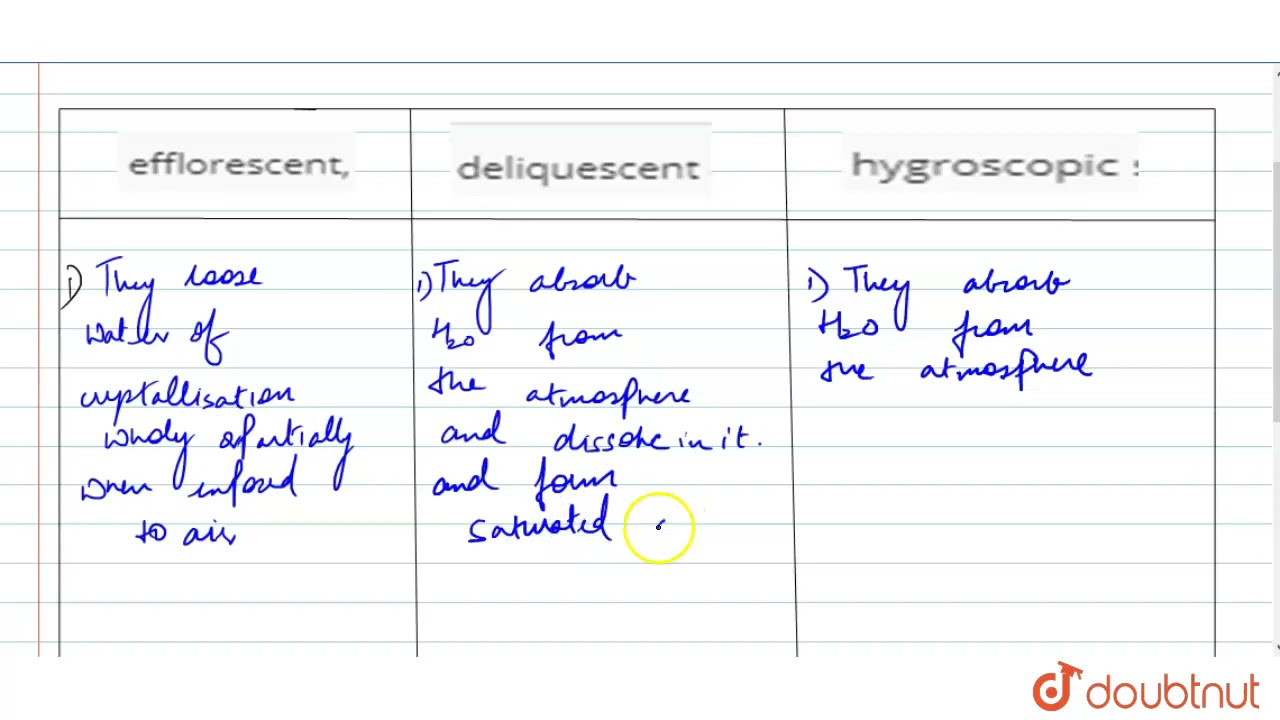

Distinctions: Efflorescent lose water; hygroscopic/deliquescent gain.
Uses: Desiccants (drying: silica gel, CaCl₂); preservatives.
JAMB Tips
- Link: Water composition ties to gas laws/combustion.
- Hardness: Temporary removed by boiling; permanent needs chemicals.
- Phenomena: Examples key—CuSO₄·5H₂O (crystallization), NaOH (deliquescent).
- Treatment: Chlorination last to kill microbes.
Water is life—and a JAMB favorite! Practice questions on hardness removal and phenomena. Next topic or clarifications? Comment below.